

The Changing Face of B2B Lead Generation: Making Sense of it
B2B lead generation has undergone major changes as buyers do more independent research before reaching out to a sales team. Business decision-makers visit websites, compare service providers, read industry articles, attend webinars and evaluate customer experiences prior to making any purchase decisions. That means businesses must build credibility long before any prospect is directly interested. Today’s lead generation requires a coordinated approach that combines visibility, education, engagement and timely follow-up. No single marketing channel is sufficient. Companies need an integrated strategy that engages potential customers at various stages of the decision-making process. Understanding these changing buyer behaviours allows businesses to create more relevant campaigns, reduce wasted marketing expenditure and improve the chances of converting interest into revenue.
Search Engine Optimisation For Sustainable Lead Generation
Search engine optimisation (SEO) continues to be one of the best ways to attract B2B prospects that are actively looking for solutions. Visibility in relevant search results can help businesses attract high-intent traffic when potential customers search for industry-specific services, business challenges or product comparisons. A B2B SEO strategy that works is knowing what keywords your audience is searching for, creating content that actually helps them, improving the performance of your website and having a clear internal linking structure. Businesses should be focusing on commercial and problem-based searches rather than just targeting high-volume, broad keywords. For example, a business software company may find content on operational inefficiencies, implementation challenges, and comparisons of available solutions useful. By publishing useful articles, detailed service pages, case studies and frequently asked questions, you build topical authority and give prospects good reasons to engage. Unlike paid advertising, which typically stops generating traffic when spending ends, well-optimised content can continue attracting relevant visitors over time.
Trust & Authority Through Content Marketing
Content marketing is a powerful B2B lead generation strategy because business purchases are often big bets, involve many stakeholders, and take a long time to evaluate. “People need reliable information before they can feel comfortable choosing a provider. Businesses can write detailed blog posts, industry insights, research reports, case studies, whitepapers, and how-to guides to address this need. The best content is about solving a specific customer problem, not always about selling a product or service.
Account-based marketing (ABM) is especially useful for B2B companies offering complex solutions to a limited number of high-value companies. ATM is not trying to reach a big, general audience. Instead, ATM is targeting specific accounts that meet the company’s ideal customer profile for marketing and sales resources. First, identify the right businesses to target. That means considering things like what industry the company is in, how big it is, how fast it’s growing, what it needs operationally, and who has the buying power. Then the Marketing teams create campaigns for each account that are customised to the account’s challenges and goals. These campaigns can include anything from custom landing pages, relevant case studies, targeted advertising, personalised email communication and coordinated sales outreach to name a few. ATM helps align marketing and sales because both teams are working on the same priority accounts. This takes some research and careful execution, but can be especially effective when individual customers represent large contract values or long-term revenue opportunities.
Email Marketing & Marketing Automation
Email marketing remains a potent channel for nurturing B2B leads, particularly when prospects require more information before making a purchase. But the key to successful email campaigns is relevance, timing and segmentation, not sending the same message to your entire database. Companies should segment contacts by industry, expressed interests, engagement history, and where they are in the buyer’s journey. Then automated workflows can deliver the right information based on the right actions. For example, a prospect downloads an industry report, you might send them related educational content and then invite them to attend a webinar or schedule a consultation. Marketing automation helps to keep a uniform communication and reduces the repetitive manual work. It can also alert sales teams when prospects show a higher intent to buy. Companies should make certain their emailing practices meet all relevant privacy laws and have the proper opt-in and opt-out features. When implemented thoughtfully, email marketing helps maintain engagement, strengthen trust, and move qualified prospects closer to a purchasing decision.
Conversion Rate Optimisation & Data-Driven Marketing
Not all traffic to a site is created equal. Companies need to understand what channels are driving qualified leads, what campaigns are driving engagement and what activities are driving conversion. Marketing analytics gives you data to measure performance and increase the effectiveness of your campaigns. Businesses should track qualified leads, conversion rate, cost per lead, lead to opportunity rate, customer acquisition cost and marketing-generated revenue. These metrics are a better measure of performance than impressions or clicks by themselves. Conversion Rate Optimisation is about finding the barriers that stop visitors from taking action – and strengthening this process. Clear descriptions of services offered, relevant testimonials, convincing calls to action, simple enquiry forms and fast loading landing pages can all increase user satisfaction. Through A/B testing of different headlines, page layouts and offers, you can learn what works for your target audience. Integrating marketing analytics with customer relationship management (CRM) systems also allows businesses to connect campaign performance with sales outcomes, making it easier to allocate resources to the strategies that deliver the greatest value.
Tailored Lead Generation & AI
B2B companies are using artificial intelligence to enhance their research of prospects, to personalise communications, to analyse customer behaviour and to automate routine marketing tasks. Artificial intelligence can be used to detect patterns in customer data, suggest related content, rank leads and aid in creating targeted campaigns. Predictive lead scoring can also aid sales teams to prioritise prospects that are more likely to convert. But AI should be used to augment marketing judgement, not replace it. Automated messages with no context, poor prospect data and too many emails can hurt credibility, not increase engagement. Businesses need to be responsible with AI, verify key information for accuracy, maintain data protection up to date and ensure communication is relevant for the receiver. The strongest approach combines the efficiency of automation with human understanding, industry expertise, and genuine customer relationships.
Aligning Sales & Marketing for Improved Results
Even the best lead generation campaigns can fail when marketing and sales teams do not work in tandem. “Marketing could concentrate on lead volume, and sales teams could focus on prospects with real intent to buy.” Without a shared understanding of what a qualified lead is, you may be missing out on valuable opportunities and wasting marketing resources. Businesses should agree on clear lead qualification criteria, agree on what information is needed prior to handover and define how fast sales teams should follow up. Talking regularly allows both teams to identify common customer objections, FAQs and gaps in current marketing material. A unified CRM system and regular reporting processes also help with improved visibility across the sales funnel. This alignment creates a more connected customer experience, reduces delays, and helps businesses identify where prospects disengage before completing a purchase. A B2B SEO Agency helps businesses improve search engine visibility, attract qualified leads, and drive sustainable organic growth through targeted SEO strategies.
How to Build a Scalable B2B Lead Generation Strategy
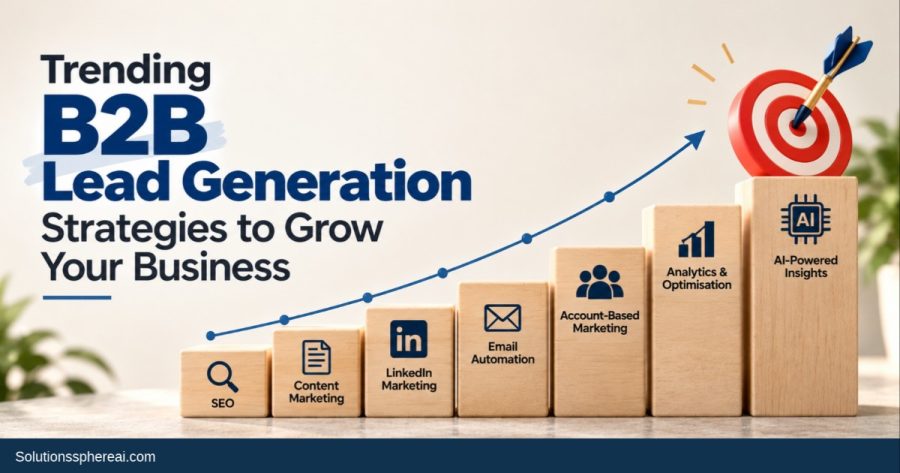
Sustainable B2B lead generation doesn’t happen from a single campaign or a single marketing channel. It’s always about understanding the customer needs, providing valuable information, establishing confidence and measuring results. SEO & content marketing for sustainable exposure LinkedIn & account-based marketing to reach the right decision makers Email automation for lead nurturing In the meantime, companies are using AI, CRM integration and marketing analytics in order to improve efficiency and make better-informed decisions. The best way to go about this is to link these activities to specific business goals and keep on tweaking them on the basis of performance data. Companies should focus on lead quality, conversion potential and long-term customer value rather than lead volume. B2B organisations can create a predictable pipeline, strengthen customer relationships, and enable sustainable business growth with the right approach and consistent execution.
For businesses looking to strengthen their digital presence, attract qualified prospects, and build measurable growth through strategic marketing, partnering with the right agency can make a meaningful difference. A B2B Digital Marketing Agency Bengaluru helps businesses explore digital marketing solutions designed to support visibility, lead generation, and business growth.