

What Is Traditional Link Building?
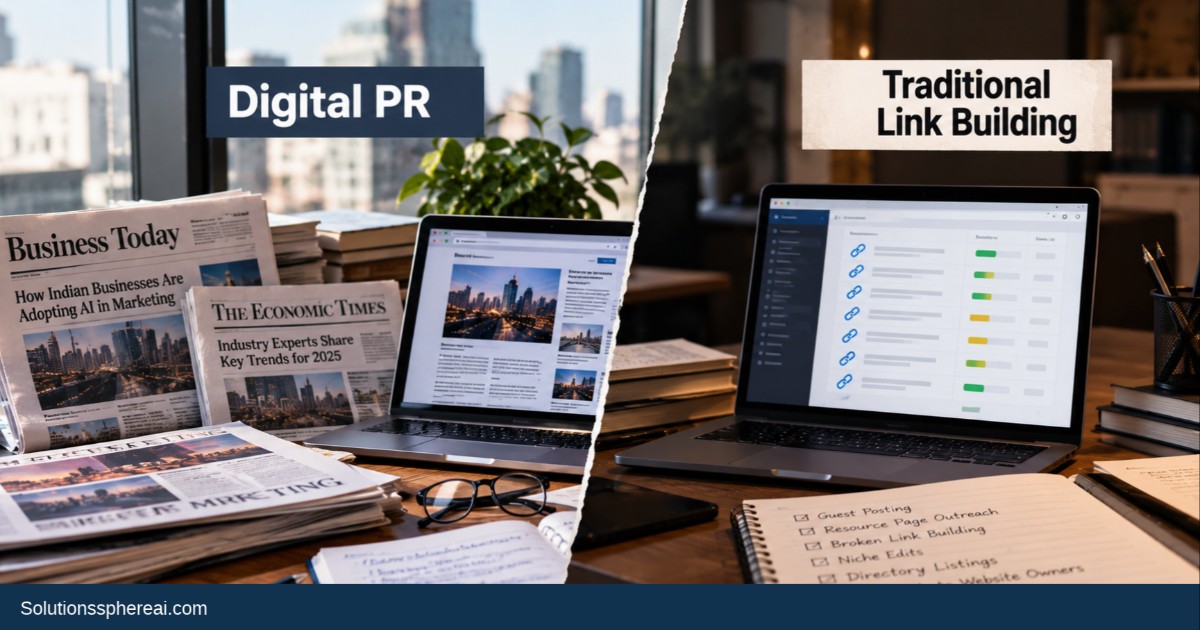
The traditional link building method generally involves seeking opportunities to have links placed or earned on other sites. This can include guest posting, resource-page outreach, broken-link building, niche edits, digital directories and reaching out to relevant website owners. Usually the process begins by identifying a website that has the potential to provide you with a valuable backlink, and then finding a valid reason for that website to link to you. Done right, this can still be a useful component of an SEO strategy. This is where professional Link building services can help businesses identify relevant opportunities, build publisher relationships and acquire links that support their wider SEO strategy. The trouble starts when link building is only about the numbers. Trying to get as many links as possible, regardless of their source or relevance, can lead to a weak backlink profile and content that exists primarily for the purpose of obtaining a link.
What Is Digital PR?
Digital PR takes a completely different approach to the same larger goal. Don't begin with the question “Where can we get a backlink?” Digital PR begins with the question, “What can we create that people will actually want to talk about?” It can be original research, industry data, a survey, an expert opinion, a detailed report, an interesting study or a strong perspective on a developing trend. Journalists, publishers, bloggers and industry websites may choose to cite the information in their own content if it is genuinely useful or interesting. The backlink then becomes a natural result of the story, and not the only reason for its creation. For businesses that want to build this kind of visibility consistently, Digital PR services can help turn original insights, research and expert knowledge into stories that have a reason to be picked up by relevant publications.
For example, let’s say a B2B marketing company conducts a survey of businesses to learn how companies are using AI in their marketing strategies. The company does not publish another generic article about artificial intelligence, but presents original findings, statistics, expert commentary and analysis. That statistic might then be used in a marketing publication. A business website may cite the research in an article on AI adoption. Perhaps an industry magazine will interview one of the company’s experts. In this case, the company isn’t just asking websites for links. It has made something that gives those websites a reason to name the brand.
Digital PR vs. Traditional Link Building
That’s where the difference lies between Digital PR and traditional link building. Traditional link building is more straightforward and SEO-centric. You locate a relevant site, identify a possible opportunity, make contact, and then work to secure a backlink. Digital PR is more like editorial. You create something with a story behind it, then you take that story to journalists, publications and audiences that might find it relevant. One is about going out and finding opportunities to earn links. The other is about creating opportunities for people to naturally talk about the brand.
How Content Differs Between Digital PR and Link Building
It also changes the type of content being played. Traditional link-building campaigns often employ blog posts, guides, resource pages and other helpful content that can be pitched to relevant websites. There is nothing wrong with this, especially when the content truly adds value. But sometimes Digital PR requires a bigger hook. Original data, new research, industry statistics, expert commentary, surveys, reports, and unusual insights tend to have more potential because they provide publishers with something that cannot be copied from hundreds of other websites.
How Outreach Differs
It's also a different sort of outreach. Traditional link-building outreach is contacting website owners, editors, bloggers or SEO contacts and telling them why a specific article or resource would be useful to their audience. Digital PR outreach is more often related to what is going on in the media right now. A PR pro would identify journalists who write on a regular basis about marketing, tech, finance, real estate, or some other niche and then pitch an appropriate story based on what’s known. “The pitch has to answer a key question for the journalist: Why would their audience care about this right now?”
That’s why Digital PR can at times feel tougher than traditional link building. You can’t just create a piece of content and expect it to get covered by publications. The idea has to be interesting, the information has to be believable, the timing has to be right, and the pitch has to get to the right people. But when everything falls into place, the results can be much more than just a single backlink.
How Success Is Measured
Another big difference is the way success is defined. Traditional link building is very focused on SEO metrics like referring domains, backlink quality, relevance, anchor text and the authority of the websites linking to you. These metrics still matter but Digital PR can generate a far greater variety of results. A successful campaign could lead to backlinks, brand mentions, referral traffic, media coverage, brand searches, social engagement, and more awareness of a particular industry. A company may even build brand recognition with people who never click through to the original article or the website immediately.
This is why it can be misleading to judge a Digital PR campaign solely on the number of backlinks it produces. A campaign may accrue fewer links but reach the brand’s audience through a highly relevant, respected publication. At the same time, a traditional link building campaign that earns multiple highly relevant, editorially placed links can bring a lot of SEO value. It’s not about a ton of links, it’s about the quality and context of the links.
Can Digital PR Replace Traditional Link Building?
So does Digital PR make traditional link building redundant? No, not really. The two can work very well together. Digital PR can create the buzz and credibility needed for a brand to stand out, whereas traditional link-building work can assist in finding more relevant opportunities and strengthening key pages across the site. For example, a company could publish original research and leverage Digital PR to have that research covered in industry publications. As the research starts to gain traction, the SEO team can identify relevant resource pages, articles, industry websites and content opportunities where the research can be leveraged to provide more value.
Why the Combination Works for B2B Businesses
This combination approach is especially useful for B2B businesses. B2B brands are often in niche markets where trust and expertise are critical. A company may publish dozens of blog posts about its services but being quoted or mentioned by respected industry publications can add another level of credibility. Seeing the same brand over and over while investigating a particular topic can build a company’s familiarity and recognition before the sales conversation even begins.
Why Digital PR Matters for Modern SEO
There's also a bigger reason why Digital PR is becoming more relevant for modern SEO. Search visibility is no longer just about making pages and getting links. Companies are vying for attention on search engines, news sites, social media, industry publications, AI-powered search experiences, and other digital channels. Good brands need to be visible on more than just their own websites. With digital PR, companies can take part in the larger conversation about their industry, rather than just creating content and hoping users will stumble across it.
That doesn’t mean that every business needs to run a big PR campaign every month. Sometimes the best way is surprisingly simple. It might have an experienced professional who can provide some useful commentary on some development in the industry. It may contain internal data that have not been published.
It might have conducted a customer survey, or found a trend from its own research. These insights can become the basis for content that has real value outside of the company’s website.
The Main Difference Between Digital PR and Traditional Link Building
The main difference between Digital PR and traditional link building ultimately comes down to why the link is there. Traditional link building begins with the objective of obtaining a backlink and then searches for a suitable opportunity. The best way to do digital PR is to create something that’s worth talking about and let the links and mentions flow naturally. Neither should be reduced to a numbers game. A backlink is good if it comes from a credible and relevant source, and it makes sense for the reader.
Building a Stronger Web Presence
If you’re a business investing in SEO today, building more links shouldn’t be your only priority. It should be to create a stronger web presence. That means creating valuable content, gaining credible mentions, building relationships with relevant publications, providing real expertise, and making your brand worth mentioning. Traditional link building can be a key part of that, but Digital PR can take the strategy a step further by linking SEO with brand visibility and authority.
At SolutionsSphereAI we believe good SEO is about creating visibility that lasts. Businesses can use digital PR, content strategy and ethical link building in combination to attract attention, build authority and forge meaningful relationships with their target audiences. Whether a business invests in Digital PR services, Link building services, or a combination of both, SSAI believes the focus should remain on creating genuine value and building authority that can support long-term search visibility. Rather than asking how many backlinks can a campaign generate, businesses should begin to ask a more valuable question: what can we create that people will actually want to reference, share, and remember?