

Why B2B Website Speed Matters
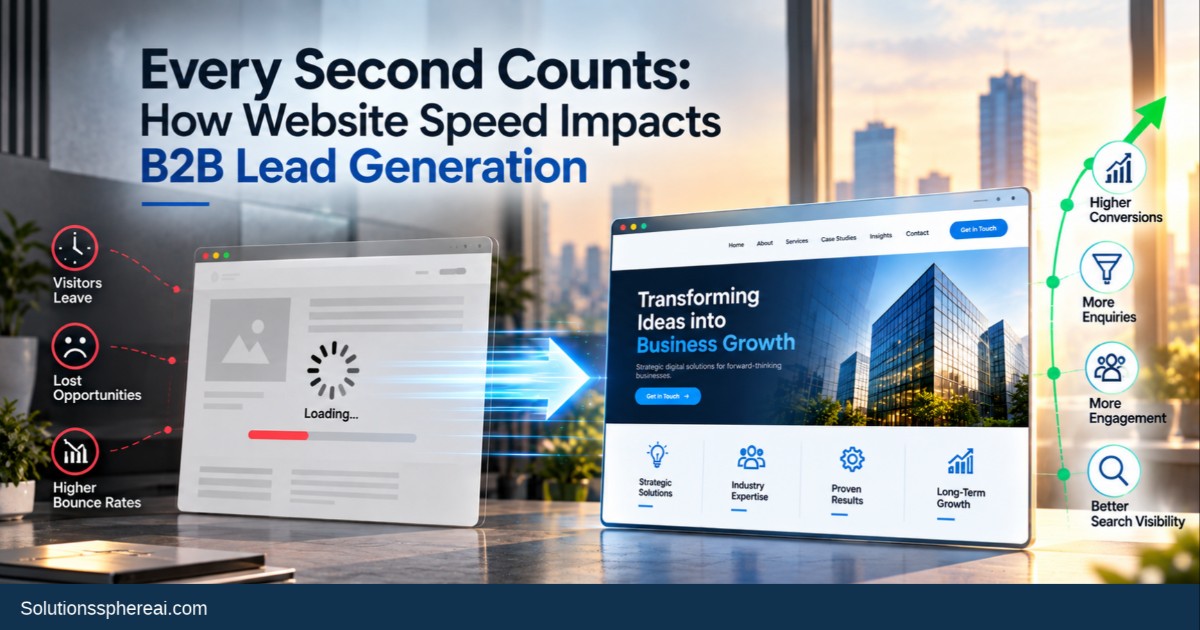
B2B buyers rarely make a decision after only one visit to a website. The buying process can involve many visits, many decision makers, much research, comparisons and internal discussions. Someone could search and find your company on Google, read a blog article, return to review a service page, review a case study and make an inquiry. And all those interactions depend on your website running smoothly. Picture a prospective client searching for a service, and clicking on your website. The page takes a few seconds to load. They wait, but the images are still loading and the page keeps shifting. Instead of trying again, they may simply return to Google and choose another result. You may never know that happened because there will be no abandoned enquiry form or notification telling your sales team that a potential customer left. The opportunity simply disappears. This is why website speed matters for B2B lead generation. It affects what happens between attracting a visitor and converting that visitor into a lead.
A slow website is hurting the first impression.
Your website is often one of the first impressions a potential client gets of your brand. A prospect may have an impression of your business based on what they see online before they even speak to your sales team. A slow website can make that experience frustrating and can give the impression that the company is not paying enough attention to its digital experience. That’s especially true for B2B companies selling technology, professional services, consulting, software, manufacturing solutions or digital services. Prospects expect these businesses to provide information quickly and efficiently. A fast website does not automatically win a customer, but a slow website can create an unnecessary reason for them to leave. When a prospect is comparing several companies offering similar services, removing unnecessary friction can make the entire research process easier.
Website Speed and Search Visibility Are Connected
Getting people to your website is only half the job. You also need to make sure they have a good experience once they arrive. Website performance is one part of a much larger SEO picture. Search engines look at a lot of signals like page experience, technical performance, content quality, mobile usability, website structure, internal linking, crawlability, and relevance. This means businesses investing in SEO should not treat website speed as something completely separate from their search strategy. For example, a company might spend weeks creating detailed blog articles and optimizing service pages around valuable commercial keywords. Those pages may start attracting organic traffic, but if visitors encounter a slow or difficult website, some of that traffic may never turn into enquiries. Good SEO Services Bengaluru strategies therefore need to look beyond keywords and content. Technical performance and user experience also have an important role to play in helping visitors move through the website.
The Impact on Landing Pages
Landing pages are particularly important for B2B lead generation because they are often directly connected to marketing campaigns. Landing pages are promoted through Google Ads, LinkedIn campaigns, email marketing, social media and other channels. The aim is to get the right person onto the page and get them to do something. That step could be filling in an inquiry form, requesting a consultation, downloading a report, booking a meeting, requesting a product demonstration or contacting the sales team. But none of this matters if the visitor leaves before the page has loaded properly. This is why landing-page speed should be considered when evaluating the performance of a paid or organic campaign. A business could have excellent advertising copy and a strong offer, but a slow destination page can still create friction and reduce the number of visitors who reach the conversion stage.
Mobile Website Speed Matters Too
B2B does not mean people only browse from desktop computers. A decision-maker might see a LinkedIn post during their commute, receive an email on their phone, or search for a supplier while away from the office. If they click through to a website and the mobile version takes too long to load, they may simply move on. Mobile users may also see slower performance due to network conditions, limitations of their device, or poorly optimized website elements. So, companies should check the performance of their websites on mobile devices instead of focusing on desktop performance alone. Big images, videos, animations, pop-ups, tracking scripts and third-party tools can all slow down loading times. Optimizing these elements can create a much smoother experience for potential customers.
Too many features can slow down a site
There is often a temptation to add more and more features to a business’ website. Chat widgets, animations, pop-ups, videos, social feeds, tools for analytics, heatmaps, forms, tracking pixels, interactive elements and third-party integrations can all have a legitimate purpose. The problem occurs when a website has too many things demanding resources at the same time. Any feature you add has the potential to affect the performance of your page. Businesses should ask themselves if each feature of a B2B website really helps visitors understand the company, evaluate its services or move on to the next step. More features do not necessarily improve the website. Sometimes removing unnecessary elements can make the website faster, cleaner, and easier to use.
Website Speed and Content Marketing
Content is an important part of B2B marketing. Companies publish blogs, guides, case studies, industry reports, comparison articles, and educational resources to attract people who are researching a particular problem. But creating useful content is only part of the process. A prospect who clicks on an article from Google expects to be able to read it without waiting for the page to become usable. If the article contains large unoptimized images, unnecessary scripts, slow-loading embedded content, or excessive design elements, the reading experience can suffer. This becomes especially frustrating when the actual content is valuable. B2B content should therefore be easy to access as well as useful. Combining a strong content strategy with a technically efficient website gives visitors a better opportunity to move from reading an article to exploring a service or contacting the company.
What a B2B SEO Strategy Should Consider
For businesses working with a B2B SEO Agency, website speed should be considered as part of the wider technical SEO strategy. This process can include things like identifying pages that take longer to load, optimizing images, reducing scripts that are not necessary, improving server response times, reviewing third-party integrations, improving caching, and checking how the website performs on different devices and connections. But the goal should not be to just chase a perfect technical score. The important thing is how well the site works for real visitors. A fast-loading site with confusing navigation and poor messaging can still struggle to generate leads. Similarly, a website with great content and messaging can lose potential customers with frustrating technical experience. The strongest results come when website performance, content, SEO, design, and conversion strategy work together. Explore SEO Services Bengaluru and B2B SEO Agency solutions to strengthen online visibility and create a more effective path from search traffic to B2B leads.
Look Beyond Website Traffic
One of the biggest mistakes B2B marketers can make is focusing only on traffic. Getting thousands of visitors to a website may look impressive, but the more important question is what those visitors do after they arrive. Do they explore the service pages? Do they read multiple articles? Do they visit case studies? Do they take time to research the company’s solutions? Do they submit requests or ask for a consultation? Ultimately, speed has to be considered in the bigger marketing picture. When a business is trying to improve the performance of its website, it needs to consider engagement and conversion metrics, not just technical metrics. This provides a clearer understanding of whether the website is actually becoming more effective at turning visitors into potential customers.
Speed Is Part of the Overall Customer Experience
Website speed will never replace good content, a strong product, effective sales teams, or a clear value proposition. However, it can support all of them. Think about the B2B buying journey from the prospect's perspective. They have a problem and are looking for a solution. They discover your company and want answers. They should not have to struggle with a slow website just to find those answers.
At SolutionsSphereAi we believe a fast website removes one more obstacle between the prospect and the information they need. That is ultimately why website speed matters for B2B lead generation. It can help create a smoother journey from search result to website visit, from website visit to engagement, and from engagement to enquiry.
For companies competing online for B2B customers, every step of this journey counts. If your website is attracting the right visitors but those visitors aren’t converting, then it is worth looking at your website performance as well as your content, SEO strategy, messaging, landing pages, navigation and calls to action. Speed increases are not only about making a website faster technically. It is about making it easier for potential customers to find information, understand your offering, trust your business, and take the next step.
For businesses looking to improve their website performance and generate more qualified B2B leads, working with the right digital marketing partner can make a difference. SSAI, a B2B Digital Marketing Agency Bengaluru, works across SEO, content, search visibility, and performance marketing to help businesses build a stronger digital presence and turn online visibility into real opportunities.