

How to Convert Social Media Followers into B2B Buyers
Social media is a great place for B2B businesses to connect with the right people, show their expertise and build relationships with potential clients. But a large social media presence doesn’t necessarily translate into new business. Many B2B companies have hundreds or thousands of followers, get likes and comments on their posts and still find it hard to generate qualified leads. The reason is simple: a social media follower isn’t necessarily a potential customer. They could be following your company because they find your content useful, want to keep up with industry developments, or even just want to learn more about your business. It takes time to turn that interest into a proper commercial lead. B2B companies shouldn't be concerned with just growing their follower numbers, but rather with a more critical question: how can we convert our social media audience into qualified leads and eventually, customers?
What It Really Means to Turn Social Media Followers into Customers
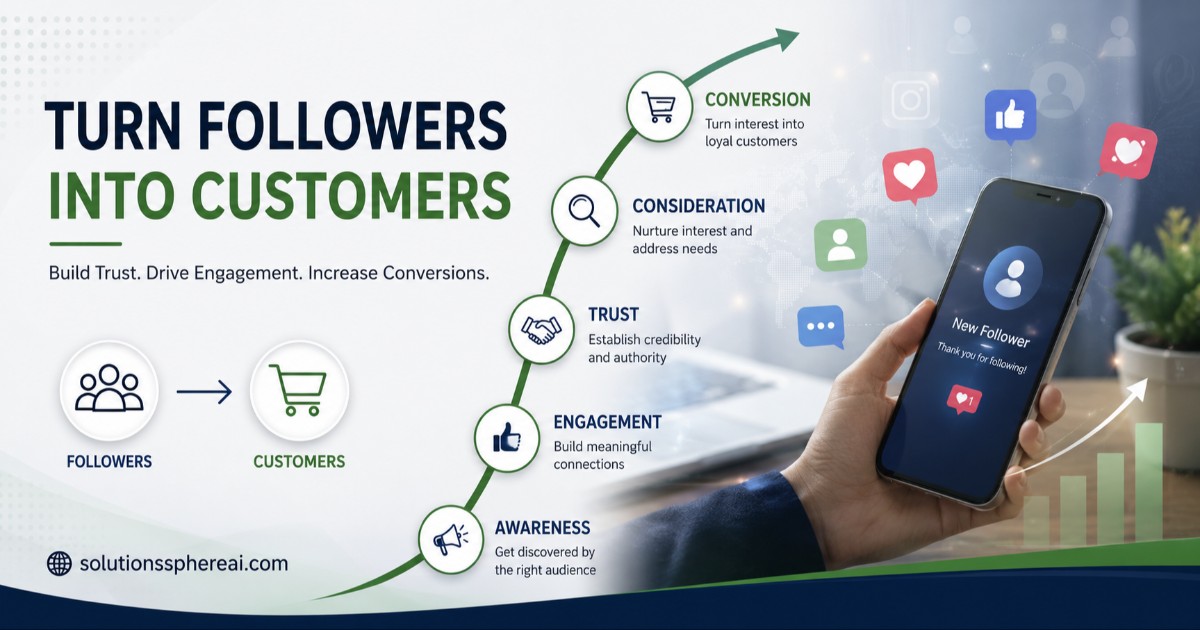
It’s rare for a B2B buying decision to be made after one social media post. Business purchasing often requires research, comparison, multiple decision makers, budget discussions and a whole lot of trust. A potential client may first hear about your company from a LinkedIn post. They might then visit your website, read a few articles, glance at your services, look at case studies and compare your business with other providers. They may only decide to reach out to your sales team after they’ve done all of that. This means social media can have a pivotal role throughout the B2B buying process. A simple way to think about that journey is: awareness, engagement, trust, consideration, inquiry and conversion. Your social media strategy should be able to support each of these stages rather than try to generate a sales inquiry from every post.
Why More Followers Don’t Always Translate Into More B2B Leads
In social media marketing follower numbers can look great but are not necessarily a sign of growth in business. A B2B company may have 10,000 followers but generate very few qualified leads. At the same time, another business with a lot smaller audience could generate regular leads because its followers are the right decision makers and businesses. For B2B marketing the quality of your audience is more important than the size. Your followers should be people that are relevant to your industry. Business owners, department heads, procurement professionals, marketing managers, technology decision-makers or other professionals who are involved in purchasing decisions. People also need time to get to know a B2B brand. They might want to know about your expertise, what problems you solve, what industries you work with and what results you’ve achieved for existing clients, before you contact them. Thus, social media should not be viewed just as a channel to generate followers. It should be used to build trust and familiarity with the people who may eventually become customers.
Creating Content for Your B2B Audience
One of the best ways to turn social media attention into business is to quit thinking about what you want to sell and start thinking about what your audience needs to know. Business decision-makers are not looking for a promotional post every time they log into LinkedIn or any other social platform. They’re more likely to engage with content that helps them understand an industry challenge, solve a problem, make a better decision, stay on top of important developments. For example, a B2B technology company might share content on how to reduce operational costs, how to improve efficiency, how to choose the right technology, how to avoid common implementation mistakes, or how to understand new industry developments. A marketing company could discuss lead-generation challenges, changing customer behavior, campaign performance or common mistakes businesses make with digital marketing. This type of content positions your company as a helpful source of information, not just another business trying to sell something. Over time, that familiarity can make a potential client feel more comfortable reaching out to your company when they do need your services.
Sell Later, Trust First
Trust is especially important in B2B marketing because business customers are often making decisions that involve large budgets, long-term commitments or operational consequences. A prospective client wants to know that you know what they need and that you can really deliver on what you promise. Social media provides B2B companies an opportunity to show expertise. Rather than regurgitate that your company is experienced, show what that experience looks like. Share case studies, customer stories, industry insights, project examples, behind-the-scenes content, product demos and practical advice What are the challenges your team is facing and what can businesses learn from past projects? For example, instead of saying you are a digital marketing expert, you could share a real-life example of a business that improved its lead generation process, the challenges they faced, the strategy you implemented, and what your company learned from the experience. This provides prospective clients something concrete to evaluate. For B2B marketing, showing is often much more powerful than telling.
Give potential customers a clear path forward.
Not everyone engaging with your content is ready to speak with your sales team. Someone is probably looking for your services, but is still doing research. Others might see a problem and not have the budget or internal approval to fix it yet. That doesn’t mean the chance is gone. Instead, facilitate the next step for interested prospects. Depending on where they are in the buying journey, you could encourage them to read a detailed blog, visit a service page, download a guide, watch a product demonstration, explore a case study, request an audit, book a consultation, or just ask your team a question. If you post on LinkedIn about common SEO challenges that businesses face, you can direct interested readers to an in-depth article or your page on SEO services. The point isn’t to have every follower you have in a sales call. The goal is to move interested prospects a step closer to becoming a qualified lead.
Create Content for Each Stage of the B2B Buying Cycle
The chances are that your social media audience is not all at the same point in the buyer’s journey. Some may have just found out about your company, while others may have been tracking you for months and already comparing your services to competitors. This means they will need different kind of content. People who are in the awareness phase might enjoy content about industry developments, statistics, educational posts, short videos, tips, and how-tos. Those actively searching for a solution might like more detailed info. At this stage, case studies, customer experiences, product information, service comparisons, project examples and demos can be more helpful. B2B marketers should be asking what does our potential customer need to understand before they are ready to contact us? instead of asking all the time what should we post today. That change of view can lead to social media content that is much more purposeful in its intent.
Optimize Your B2B Social Media Profile
A good social media post may catch someone’s eye, but your company profile is often where that person decides if they want to learn more. For a B2B company, the profile should immediately tell people what your business does and who you help. It should describe the problems you solve, the industries you work with, and why a potential client would consider working with you. Your website link should also lead to a relevant page, not just send everyone to the homepage. If someone discovers your company via a post on B2B lead generation, for example, sending them to a related service or resource page can make for a much more seamless journey. Such small changes can help to bridge the gap between social media engagement and real business inquiries.
Talk To Decision Makers, Not Just Followers
Social media is more than just publishing. B2B conversations can be just as valuable for B2B companies. Answer questions, comment on posts, join in industry discussions, connect with relevant companies and build relationships with professionals that are part of your target market. You may not get a lead out of a conversation. A decision-maker today may work with your company and, a few months later, reach out when their business is ready to make an investment. This is especially common in B2B, where buying decisions can take weeks or months to make. The goal is to stay relevant and get to know the right people so when a business need arises, your company is already on their radar.
Integrate Social Media with Your Other Marketing Channels
Your B2B social media strategy should not be a stand-alone strategy living in isolation from your other marketing. A LinkedIn post can spread awareness, a blog can give more in-depth information, a case study can show your results, and your website can describe your services. Finally, a consultation or inquiry form can help to convert an interested prospect into a sales opportunity. For example, a B2B company might post on LinkedIn about a problem that is common in its industry. The post could link to a comprehensive blog describing possible solutions. Then the article could suggest a related service and encourage interested businesses to reach out to them. This makes for a much more natural journey rather than just posting a sales message and asking people to buy. It's also important to understand what happens after someone engages with your content. What posts bring people to your website? Which channels produce qualified leads? What topics do your target decision makers engage on? What campaigns are producing real inquiries? The answers can help you spend more time on the content and channels that drive business growth.
Measure B2B Leads, Not Just Likes & Followers
Likes, comments, shares and follower growth are useful measures of engagement, but they shouldn’t be the only metrics a B2B company measures. Connecting social activity to business outcomes is more useful for B2B social media marketing. Companies can track metrics like LinkedIn profile views, social media traffic to the website, qualified inbound leads, content conversion rates, lead form submissions, consultation requests, engagement from target accounts, connection acceptance rates, and inquiries generated from specific campaigns. That doesn’t mean engagement is unimportant. This means that you need to be able to understand if that engagement is coming from the people and business you actually want to reach. A post that receives a few relevant decision-maker interactions but fewer likes can be more valuable than a post that receives hundreds of likes from people who will never become customers.
Repurpose Popular B2B Content Into New Leads
Not every social media post has to be lead-generating. Some content is there to introduce your brand, some is there to build credibility, some is there to start conversations and some is there to help your audience understand a complex topic. The goal is to identify topics your target audience consistently finds interesting. If a specific LinkedIn post receives high engagement from your target decision makers, don’t stop there. Make the subject a series. You could write another LinkedIn post, a detailed blog, a short video, a case study, an infographic or even a webinar on the same subject. Think about boosting top performing content to a well defined B2B audience. This over time creates a useful loop. Your social media activity helps you learn what your target market cares about. Those insights help you to produce better content. More relevant professionals and businesses come to better content. Those relationships can eventually evolve into qualified leads and customers.
From Followers Into B2B Customers
A large social media following can certainly help a business, but follower numbers alone do not determine the success of a B2B social media strategy. The real value is what happens after someone finds your company. Do they know what you’re up to? Do they see proof of your expertise? Do you believe in your business? Is useful information to be found? And when they are ready to explore your services, do they know what to do next? When these elements come together social media can be so much more than a visibility tool. It can be a vital part of your B2B lead-generation strategy. The aim is not to convert every follower into a customer. The goal is to develop relationships with the right audience and to help qualified prospects transition from awareness to inquiry and ultimately to become customers.
How Solution Sphere AI is able to Assist
Generating qualified leads from a B2B social media audience is not a matter of posting content one or two times a week. You need a strategy that connects your content to your target audience, marketing goals, sales objectives and the overall customer journey. Solution Sphere AI’s Social Media Marketing service is designed to develop platform-specific strategies that are aligned with business goals. This includes developing a content strategy, creating content, community management, audience segmentation, performance monitoring and ongoing optimization. Various social platforms can fulfill different objectives for B2B businesses. LinkedIn can be especially useful for reaching decision makers, building thought leadership and generating business leads. YouTube can help with long-term visibility by using educational videos, product demos, and deep dives into industry content. Businesses can use Instagram, Facebook and X to build brand awareness, share content related to their industry and keep in touch with their wider audience. The right platform for your business will depend on where your target customers spend their time and how they make their buying decisions.
At SSAI we believe a strong B2B social media strategy isn't about being everyplace. It’s about being useful, credible, consistent and visible where your potential customers actually look for you. When social media is paired with valuable content, the ability for authentic engagement, trust-building and a clear conversion journey, followers can slowly become prospects, prospects can become qualified leads, and qualified leads can become long-term B2B customers.