

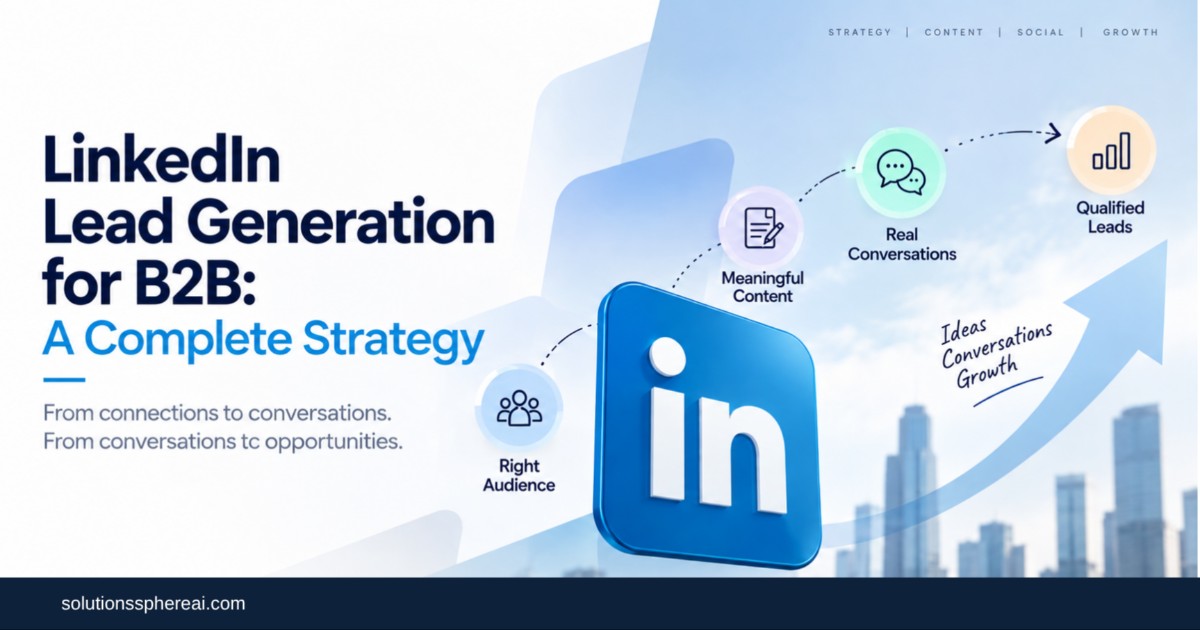
Getting attention on LinkedIn isn't particularly difficult. Getting the attention of someone who could actually become your customer is much harder. And getting that person to trust your business enough to start a conversation takes even more work.
LinkedIn can generate B2B leads, but it doesn't happen simply because a company is posting regularly. There needs to be a reason behind what you're posting, who you're talking to, and what you want people to do after they see your content.
Know Who You're Talking To
Before creating a content calendar, it helps to forget about content for a moment and think about the person on the other side of the screen. Who are they? What does their day look like? What problems are they dealing with? What are they being asked to improve? What makes their job difficult? A marketing head might be struggling to generate quality leads despite spending heavily on campaigns. An HR leader might be looking for better ways to attract talent. A business owner might simply be trying to figure out why the website gets traffic but very few enquiries.
These are the things people actually care about. When a LinkedIn post talks directly about a problem someone is facing, they are much more likely to stop scrolling. It feels relevant instead of feeling like another advertisement. This is why good LinkedIn marketing starts with the audience, not the post.
People Don't Go on LinkedIn Looking for Advertisements
Think about your own LinkedIn feed. Most people aren't opening LinkedIn hoping to see another company saying, “We are proud to announce our services.” They are looking for something useful. Maybe it's an interesting industry insight, an opinion they hadn't considered, a solution to a problem, or simply something that teaches them something new. B2B brands need to understand this.
If every post is about the company's services, achievements, awards, or features, people have very little reason to keep following. But when a company consistently shares useful information, people start associating that company with knowledge. That's a much stronger position to be in. Instead of saying, “We are experts in digital marketing,” show people that you understand digital marketing. Talk about why campaigns fail. Explain why website traffic doesn't always become leads. Discuss changes in search behaviour. Share lessons from real campaigns.
You don't always have to tell people you're good at something.
Sometimes, showing that you understand it is enough.
Don't Expect One Post to Bring You a Customer
One of the biggest misunderstandings about LinkedIn marketing is expecting every post to generate a lead. It usually doesn't work that way. Someone might see your post today and scroll past it. They might see another post two weeks later. A month later, they could read one of your blogs. Later, they might visit your website. Then, when they actually need the service you offer, your company is already familiar to them. You may never know how many small interactions happened before that enquiry came in.
This is especially common with B2B purchases because people generally don't make those decisions instantly. There can be multiple people involved, budgets to consider, comparisons to make, and plenty of internal discussions. LinkedIn's job is often to start building familiarity before the buying decision happens.
Your Content Should Answer Real Questions
A useful way to think about LinkedIn content is to ask yourself: What question would my ideal customer ask me if we were sitting across a table?
That question can become a post. If customers keep asking why their website isn't converting, write about it. If they don't understand the difference between SEO and paid advertising, explain it.
If they are spending money on social media but aren't seeing business results, talk about where things might be going wrong. This type of content tends to feel more natural because it comes from actual problems rather than from a list of topics that simply “need to be posted.” And it doesn't have to be complicated. Sometimes a simple explanation of something people struggle with is more useful than a post filled with statistics and marketing terminology.
Your People Matter Too
A company page is important, but B2B marketing doesn't have to happen entirely through the company page. People want to know who is behind a business. A founder sharing what they learned from a difficult client project can be interesting. A marketer talking about something that didn't work in a campaign can be relatable. A sales professional explaining a common customer objection can be genuinely useful. These posts don't necessarily need to promote the company.
In fact, they often work better when they don't. When people see the people behind a business sharing real experiences and opinions, the company starts to feel less like a logo and more like a group of people who know what they're doing. That can make a big difference when someone eventually considers working with you.
Don't Forget the Conversation
There's another part of LinkedIn that businesses often ignore: the comments section. Publishing a post and disappearing isn't really social media marketing. If someone leaves a thoughtful comment, respond to it. If a potential customer posts about a problem you can genuinely contribute to, join the conversation. If someone in your industry shares an interesting opinion, add your own perspective. You don't need to pitch your services every time.
Sometimes simply being helpful is enough. Over time, these small interactions can make your name familiar to people you would otherwise never have had a reason to contact. And when you eventually send them a message, it doesn't necessarily feel like a completely cold approach.
Don't Send the “Can We Schedule a Call?” Message Too Soon
We've all received those LinkedIn messages. “Hi, I came across your profile. We are a leading company providing innovative solutions. Can we schedule a 15-minute call?” It's easy to understand why businesses do this. They want leads. But the person receiving the message doesn't necessarily have a reason to care yet.
A better approach is to start with relevance. Understand who you're speaking to. Look at what they do. If there is a genuine reason to reach out, mention it. Start a conversation rather than immediately trying to book a meeting. Not every conversation needs to end with a sales call. Sometimes the first goal is simply getting a response. Social media marketing works best when it goes beyond visibility and creates conversations that can lead to genuine business growth.
Give Interested People Something Useful
Eventually, someone who likes your content may want to learn more. That's where your website, blogs, case studies, guides, landing pages, webinars, or other resources become important. Imagine someone reads your LinkedIn post about improving B2B lead generation. Instead of simply saying “Contact us to know more,” you could direct them to a detailed guide that explains the problem in greater depth.
That feels like a natural next step. The same applies to lead magnets. A useful checklist, report, template, or guide can give someone a genuine reason to share their contact details. The important word here is useful. If the resource doesn't provide much value, people will notice.
LinkedIn Ads Can Help, But They Aren't Magic
Organic LinkedIn content takes time. Paid advertising can help you reach the right audience faster. For example, a company may want to reach marketing heads in mid-sized technology companies or business owners in a particular industry. LinkedIn's professional targeting can make this possible. But advertising doesn't fix a weak message. If the post isn't interesting, the offer isn't clear, or the landing page doesn't give people a reason to act, putting money behind it won't suddenly make it work. It's better to first understand what your audience responds to and then use advertising to reach more of the right people.
Look Beyond Likes
A post with hundreds of likes can feel successful. But likes don't pay the bills. For a B2B business, the more useful questions are: Did the right people see the post? Did someone from a target company engage with it? Did visitors come to the website? Did anyone download something? Did it generate an enquiry? Did that enquiry turn into a genuine sales opportunity? Sometimes a post with 20 likes can be more valuable than one with 500 likes if those 20 people include the exact kind of customers you're trying to reach. Reach is useful. Relevance is better.
Give It Time
LinkedIn lead generation is not something that usually happens overnight. There will be posts that perform well and posts that barely get noticed. Some topics will surprise you. Others that seemed like great ideas will go nowhere. That's normal. The important thing is to keep learning from what happens. Look at which topics get meaningful engagement. Notice who is responding. Pay attention to which posts bring people to your website. Then use those insights to improve the next round of content. Over time, the process becomes much less about guessing what to post and much more about understanding what your audience actually cares about.
LinkedIn can absolutely become a source of B2B leads, but it works best when you stop thinking of it as a place where you simply publish content. Think of it as a place where potential customers are getting to know your business. Some will discover you through a post. Some will find you through a comment. Some will read three or four of your articles before they ever interact with you. And some may not become customers for months.
That's okay. The goal isn't to turn every person who sees your post into a lead. The goal is to be useful enough that when the right person has a problem you can solve, your name is already familiar. That is where LinkedIn becomes much more than a social media platform. It becomes a way to build trust, start conversations, and create opportunities that can eventually turn into real business.
How SolutionSphereAI Can Help
At SolutionSphereAI, we believe LinkedIn works best when it is treated as more than just a platform for posting content. As a B2B digital marketing agency, we help businesses build a stronger presence through the right mix of content, social media marketing, SEO, paid advertising, and lead-generation strategies.
In SSAI the focus is not simply on getting more views or followers, but on reaching the right audience and turning attention into meaningful business opportunities. From understanding what your customers care about to creating content that starts conversations, our approach is built around helping B2B brands grow their visibility, credibility, and pipeline in a way that delivers long-term value