

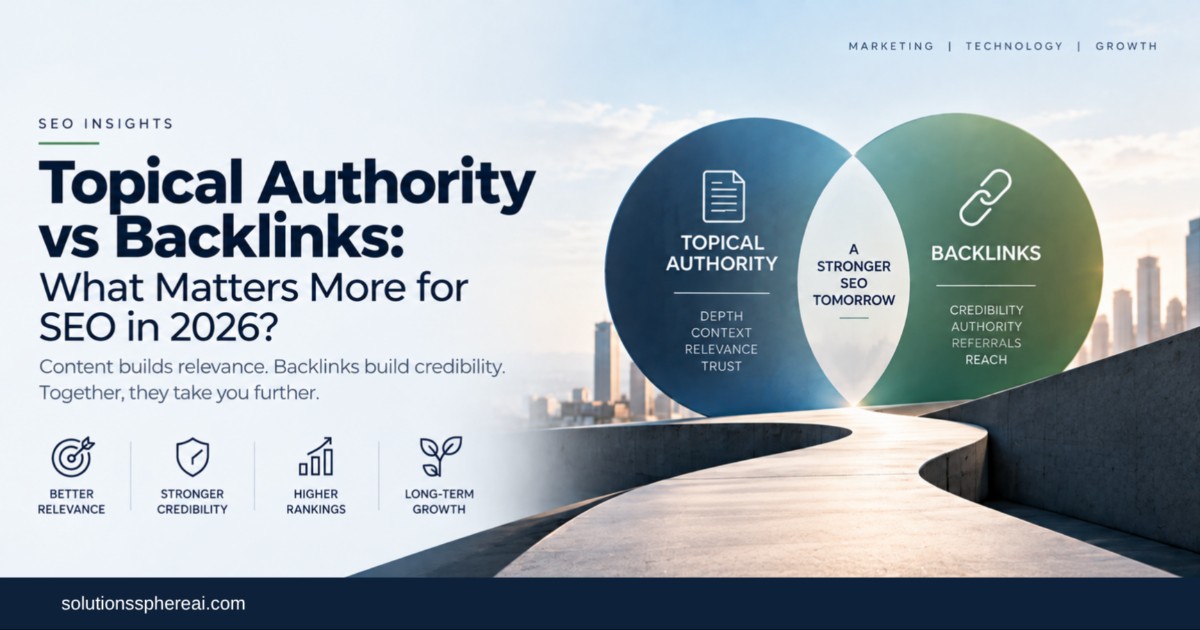
The answer is both, but if you are just getting started building an SEO strategy, then topical authority is a better place to start. What does Topical Authority mean? Topical authority is just being seen as an authoritative source for a particular subject. It’s not about writing an article and hoping it ranks. That comes from consistently covering a topic from different angles and answering the questions your audience actually has.
For example, if a marketing site wants to be known for SEO, one article about “What is SEO?” is not enough. This could include keyword research, technical SEO, internal linking, content strategy, topic clusters, backlinks, search intent, analytics, and other relevant areas. Gradually, the website begins to demonstrate that SEO is not just one thing it wrote about, but something it knows.
People very seldom look for one thing. Often one question leads to another.
Someone searching for “how to improve SEO” may soon be searching for keyword research, internal linking, backlinks, content clusters or technical SEO. If your site can do that well, you are giving people a reason to stick around on your site and come back later. That’s what real topical authority is. You're not trying to rank a page. You are building a website that people can trust for a specific topic.
Are Backlinks Important Still?
Yes. Backlinks still count but the quality of those links is much, much more important than chasing a big number.
For instance, a relevant link from a trustworthy marketing publication can be much more helpful than dozens of links from irrelevant sites. If another reputable website finds your research, data or guide useful enough to link to, that link has a genuine purpose. Instead of asking, “How many backlinks do we have?” a better question is, Are the right websites finding our content valuable enough to mention?
That shift in mentality can make your link building strategy a whole lot more sustainable.
Backlinks or Topical Authority: Which Should I Build First?
They are not really competitors. They work. Imagine your content as the basis of your website. Topical authority reinforces that foundation by demonstrating that you know your stuff. Backlinks then add a further layer of credibility by demonstrating that other websites are prepared to reference your work. A lot of backlinks won’t fix weak or generic content. At the same time, even well-made content can be lost in the shuffle of highly competitive search results without external recognition. That’s why it’s best to create something that is really useful first and then worry about getting it noticed.
The AI Content Issue.
AI has sped up content creation by a lot. That’s helpful, but it’s also created a new problem: there’s a lot more average content on the internet. If everyone can publish 10 articles a day, publishing 10 articles a day isn’t much of a competitive advantage anymore. The human element makes content memorable: real-life examples, original research, personal experience, expert opinions, useful data, and a point of view. Artificial intelligence can be helpful in research, ideas, planning and repetitive tasks, but it shouldn’t replace the thinking behind the content.
The point isn't to create more content just because we can. It’s about creating better content that people actually want to read. Don't Write Just for Keywords. Good SEO starts with understanding people, not keywords. If someone is searching for best “digital marketing agency” they may also want to know about pricing, services, results, reviews, comparisons, and whether or not an agency is right for their business. Those questions are just as important as the initial search. Don’t write a bunch of individual articles on every little keyword variation, but instead focus on creating content around the problems your audience is trying to solve. This way your articles are naturally linked together, and internal linking is useful, not forced.
Expertise Still Counts
There is another element to consider when talking about topical authority: trust. People want to know they are reading something that comes from a source that really knows the subject matter. Real experience, clear explanations, original insights and credible information all help make the content more believable. This is particularly important as AI makes it easy to generate content about just about anything. Having more content is not enough. Your content stands out when you show that you understand the subject.
What Should Companies Be Thinking of in 2026?
If you are starting an SEO strategy now, build topical authority first. Decide what you want your business to be known for and produce useful content on that topic. Answer the important questions and interlink related articles. Keep improving the content over time. Once you have a good base, concentrate on obtaining quality backlinks from original research, useful guides, expert opinions, case studies and content that other sites will naturally want to link to. You don’t need hundreds of blog posts or thousands of backlinks. You need content that is useful enough to get attention.
The Bottom Line
If you’re wondering whether to spend your time building backlinks or creating more content, don’t look at them as two separate choices. Start by building useful, well-connected content around the topics your business understands best. Once that foundation is strong, backlinks can help push that content further. In 2026, SEO is less about trying to find a shortcut and more about building something worth finding. Create content people trust, cover your subject properly, and let quality backlinks strengthen what you’ve built.
SEO According to SSAI
At Solutions Sphere AI (SSAI), we consider SEO to be more than just keywords, rankings and backlinks. The real aim is to create a website people can find, understand and trust. That’s creating value content, building depth in the topics that matter and using AI to make the process smarter without losing the human side of marketing. Backlinks are still part of the strategy, but they work best when there is something of real value behind them.
SSAI believes that at the end of the day SEO is not really about topical authority vs backlinks. It’s about being a website worthy of ranking — and giving people a reason to come back.**