

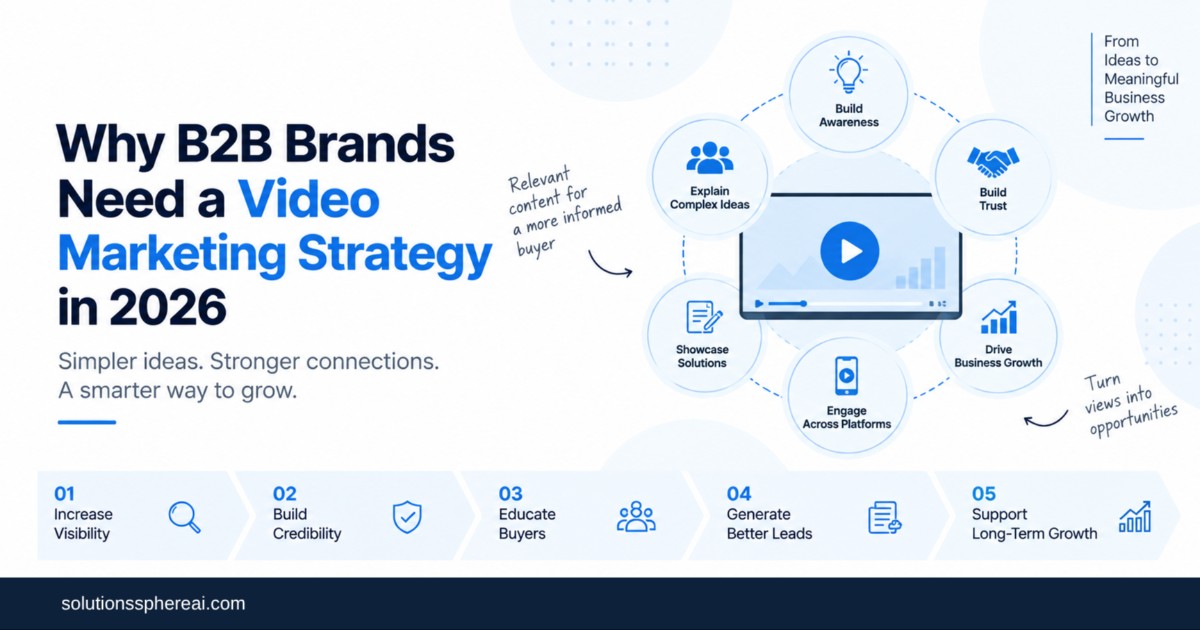
For a long time, video marketing was mostly associated with consumer brands. You would see fashion brands launching reels, food companies creating short videos and technology companies showing off their latest products. B2B companies, on the other hand, often stuck to blogs, brochures, presentations, case studies and long product pages. That is changing. In 2026, video has become a much more important part of the B2B marketing mix because the way people research products and services has changed. Buyers do not always wait for a salesperson to explain what a company does. They search for answers themselves, compare different companies, watch videos, read reviews and increasingly use AI tools during their research. If a B2B company is not creating useful video content, there is a good chance potential customers are learning about the industry and its solutions somewhere else.
B2B Buyers Are Doing More Research on Their Own
The modern B2B buyer does not necessarily start their journey by calling a salesperson. They may first come across a company on LinkedIn, search for its website, read a few articles, watch a YouTube video and compare it with other businesses. By the time they finally contact a sales team, they may already know quite a bit about the company and its competitors.
This makes the content a company publishes before that first conversation extremely important. A useful video can answer some of the basic questions a potential customer has before they ever speak to sales. It can explain an industry problem, introduce a solution or simply help someone understand what the company actually does.
Video Makes Complicated B2B Ideas Easier to Understand
Many B2B products and services are not easy to explain. A software platform might have dozens of features. A manufacturing company may sell highly technical equipment. A consulting company may offer a service where the value comes from expertise rather than something physical.
This is where video can be particularly useful. Instead of asking someone to read several paragraphs explaining how something works, a company can simply show them. A software business can record a product walkthrough. A manufacturer can demonstrate its equipment. A marketing agency can explain how it approaches a particular business problem.
Video does not replace written content, either. The two can work together. A detailed blog can provide depth, while a video can explain the main idea in a much simpler way. A company can also take information from an existing article and turn it into a short video, giving the same idea a second life across different channels.
B2B Marketing Needs to Feel More Human
One problem with traditional B2B marketing is that it can sometimes sound too formal. Visit enough B2B websites and you will start seeing the same phrases everywhere: “innovative solutions,” “end-to-end services,” “customer-centric approach” and “industry-leading expertise.”
The problem is that these phrases do not tell a potential customer much about the actual people behind the company.
Video gives businesses a chance to change that. An expert can explain an industry problem in their own words. A founder can talk about why the company was started. A team member can demonstrate a product. A customer can explain their experience.
These small things can make a company feel more real. And in B2B, where purchases can involve significant money and long decision-making processes, people want to know who they are dealing with.
Short-Form Video Is Becoming More Relevant for B2B
When people hear “short-form video,” they often think about entertainment content. But that is changing. Platforms such as LinkedIn and YouTube have become useful places for professional and educational videos as well.
A B2B company does not need to explain an entire industry in one video. It can focus on one useful idea at a time. A digital marketing company, for example, could create separate videos explaining common SEO mistakes, keyword research, content strategy or paid advertising rather than putting everything into one long video.
Short videos also make it easier for people to consume content during a busy workday. Someone may not have time to read a 2,000-word article, but they might spend a minute watching a useful explanation.
Video Should Support Different Stages of the Buying Journey
Another common mistake is treating video purely as an awareness tool. Getting views is useful, but B2B companies can get much more from video when they create different content for different stages of the buying process.
At the beginning, educational videos can introduce an industry problem or explain a trend. When someone starts considering different solutions, product demonstrations, expert explanations and comparison videos can help them understand their options. Further down the journey, customer stories, testimonials and implementation videos can provide the proof needed to move forward.
The important thing is to give every video a purpose. Before creating one, marketers should ask a simple question: What should someone understand or take away from this video?
If the answer is clear, the video is much more likely to be useful.
Customer Stories Can Make the Message More Believable
B2B companies naturally talk about their own capabilities. But potential customers also want to hear from people who have actually used the product or service.
That is why customer-story videos can be so effective. Instead of simply saying that a company delivers results, a customer can explain what problem they were facing, why they needed a solution and what happened after working with the company.
A good case-study video does not need to feel like a traditional advertisement. In many cases, a straightforward explanation from a real customer can feel more believable than a heavily scripted promotional video.
For someone considering a similar solution, seeing another business deal with a problem they recognise can make the product or service much easier to understand.
You Do Not Need a Huge Production Budget
Some B2B companies hesitate to start video marketing because they assume every video needs professional cameras, a studio and an expensive production team.
That is not necessarily the case.
Good audio, clear visuals, useful information and a strong structure matter far more than making every video look like a television advertisement. An expert explaining a complicated topic clearly can provide more value than an expensive video that says very little.
Companies can also make their existing content work harder. A webinar can be turned into several short videos. An interview can become multiple social clips. A product demonstration can be shared on the website, YouTube and LinkedIn.
The goal should not be to create one impressive video and stop. It should be to build a repeatable content system.
Measure More Than Just Video Views
Views are an easy metric to understand, but they do not tell the whole story.
A B2B company should also look at watch time, engagement, website visits, enquiries, demo requests and the quality of leads generated through its content. The right metric will depend on the purpose of the video.
For example, a video designed to introduce a company to a new audience may focus on reach and engagement. A product demonstration may be more closely connected to website visits or enquiries. A customer case study may help influence prospects who are already considering a purchase.
The important thing is to measure the result that actually matters rather than chasing a high view count simply because it looks impressive.
The Real Value of B2B Video in 2026
B2B video marketing in 2026 is not simply about following another digital marketing trend. It is a response to the way people now research and evaluate businesses.
Buyers have more information available to them than ever before. They can search Google, browse LinkedIn, watch YouTube videos, read reviews and use AI tools to research potential solutions. That means companies need to be present during these research moments, but simply being present is not enough. The content also needs to be useful.
Video gives B2B brands a way to explain complicated ideas, demonstrate products, share expertise and introduce the people behind the business. It can help a potential customer understand a company before they ever speak to sales. For B2B brands, working with a B2B SEO agency can help improve search visibility, attract relevant traffic and reach potential customers during their research journey. Businesses looking for reliable SEO services in Bengaluru can also use a focused SEO strategy to build stronger online visibility and generate more qualified leads.
How SolutionsSphereAI Can Help
At SolutionsSphereAI (SSAI), we help B2B brands build stronger digital visibility through SEO, content marketing, search visibility and performance marketing. While video may be one part of a brand’s content strategy, it works best when it is supported by the right topics, keywords and overall digital strategy.
For B2B brands looking to grow in 2026, at SSAI we believe the focus should be on creating useful content, reaching the right audience and building visibility across the channels where potential customers are already researching. That is where a well-planned digital marketing strategy can make a difference.