

The customer journey is no longer linear.
Think back to the last time you decided to buy something online. You probably didn’t see an ad, click on it and then go buy something. You may have seen the brand on social media, searched for it later, visited its website, read some reviews, watched a video, and maybe even received an email before you finally decided if the company was worth your money. This is how people engage with brands today. The customer journey rarely happens in one place, and that’s why businesses need an omnichannel marketing strategy.
More Than Just Being on Multiple Channels
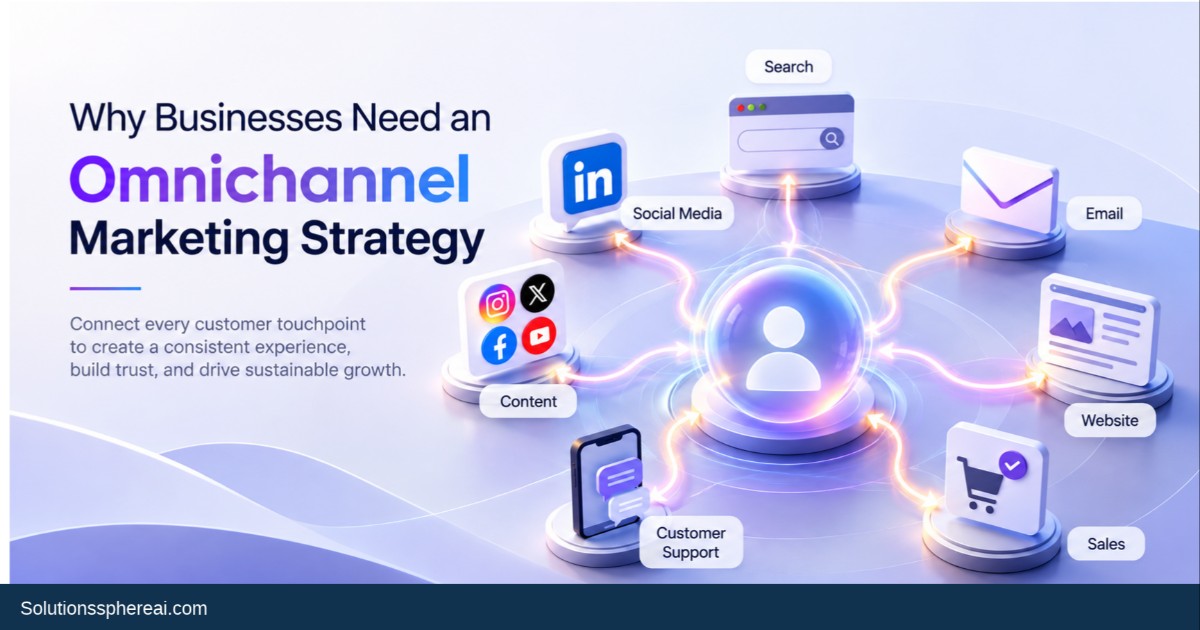
Being present on multiple channels is no longer enough. A business can have a website, LinkedIn page, email campaigns, search ads, and social media accounts and still deliver a disconnected customer experience. Omnichannel marketing takes a different approach. Instead of treating every platform as a separate marketing activity, it connects them so that customers experience one consistent brand wherever they interact with it. The goal is simple: make the journey feel natural, relevant, and connected rather than fragmented.
Customers Move Between Channels Naturally
Customers today move between channels without thinking about it. Someone might discover a company through a LinkedIn post in the morning, search for the brand that evening, read one of its blogs a few days later, and eventually contact the sales team weeks afterward. They do not see these as separate marketing touchpoints. To them, it is simply one journey with the brand. Businesses need to think the same way. If every interaction is planned independently, there is a risk that the customer will receive mixed messages or be asked to start the conversation all over again.
Why Omnichannel Is Critical in B2B Marketing
This is even more important when the buying process is complex. In B2B marketing, for example, customers rarely choose to do business with a company based on a single campaign. A prospective client may spend weeks or months researching a solution, comparing vendors, discussing options internally and looking for evidence that a company can actually deliver on its promises. During that time, they may interact with a brand in many ways. They may read a blog to learn about a problem, download a resource to learn more about the topic, follow the company on LinkedIn, get an email, and finally speak to a salesperson. Every one of those interactions contributes to the final decision.
Delivering a more connected customer experience
An omnichannel strategy helps those interactions feel connected. Rather than starting from scratch each time a prospect moves to a different channel, the business can build on what has already transpired. For example, someone who has previously engaged with educational content might be ready for a more complex case study or solution-oriented resource. For someone who is new to the brand, there might be a need for some intro content first. When businesses understand where people are in their journey, they can communicate with greater relevance instead of sending the same message to everyone.
Building Trust Through Consistency
Consistency plays a huge role here. Imagine seeing a company position itself as innovative and customer-focused on LinkedIn, only to find a website that feels outdated and communicates something completely different. Even if the company's actual services are excellent, the inconsistency can create doubt. Customers naturally look for signals that a business is reliable. When the messaging, visual identity, tone, and overall experience remain consistent across channels, the brand feels more credible. The message may be adapted for each platform, but the underlying story should remain the same.
Every Channel Has a Different Role
That does not mean businesses should simply copy and paste the same content everywhere. In fact, that can make an omnichannel strategy feel repetitive. Each channel has its own purpose and audience behavior. LinkedIn is a good place for sharing insights about your industry and establishing authority, and a website can go into more detail. Email can build on an existing relationship, search can reach people actively looking for a solution and sales conversations can address specific business requirements. Omnichannel marketing is about connecting these roles, not making every channel identical.
Leverage Customer Data for Better Experiences
Another huge advantage is that it provides companies with a clearer picture of what customers really want. By linking data from several touchpoints, marketers can detect trends that may otherwise be missed. A prospect clicking through a blog, email, ad, landing page or social post can provide good signals about interests. Over time, these insights can help businesses create more relevant campaigns and improve the customer experience.
Measuring the Complete Customer Journey
This also changes the way marketing performance should be measured. It is tempting to look at the last action before a conversion and give that channel all the credit. But customer decisions are rarely that simple. A prospect may discover a company through organic search, engage with its social content, read several articles, click an email, and then request a consultation after seeing an advertisement. Which interaction actually created the customer? The honest answer is probably a combination of all of them. An omnichannel approach encourages businesses to look at the entire journey rather than judging every channel in isolation.
Omnichannel Marketing Does Not End With the Sale
The benefits do not end when a prospect becomes a customer. In many cases the after-sale experience is as important as everything else before. Clients want useful information, timely communication, responsive support and reasons to continue engaging with the brand. Email, content, customer service, account management and targeted communication can be used to build that relationship. When these experiences are connected, customers are more likely to feel that the business understands them rather than simply trying to make another sale.
Start With the Customer Journey
The starting point should always be the customer journey. Businesses need to know how customers find them, what questions they have, what information they need before making a decision and what may prevent them from moving forward. Since questions are clear it is easier to define the role of each channel. A social post can spark an idea, a blog can explore it further, an email can keep the conversation going, and a sales interaction can convert that interest into an opportunity. Each touchpoint becomes part of a larger story instead of an isolated campaign.
Putting the Customer Back at the Centre
At its heart, omnichannel marketing is really about putting the customer back at the centre of marketing. Customers do not think in terms of departments, campaigns, platforms, or marketing funnels. They simply experience a brand. If that experience feels confusing or inconsistent, they may move on. If it feels useful, familiar, and trustworthy, they are far more likely to keep engaging.
Turning Each Touch point Into One Journey
For businesses, it creates an opportunity to move away from disconnected marketing activities, and build something much more valuable: a continuous relationship with the customer. Every social interaction, search result, website visit, email, piece of content, and sales conversation can contribute to that relationship when they are connected by a clear strategy. A B2B Digital Marketing Agency helps businesses build targeted digital strategies that attract the right audience, generate qualified leads, and drive sustainable growth.
Building a Connected Digital Presence With SolutionsSphereAi
At SSAI, we believe effective digital marketing should do more than generate individual clicks or impressions. It should create meaningful connections between brands and the people they want to reach. By bringing strategy, content, technology, and customer experience together, businesses can turn scattered touchpoints into a journey that feels consistent from the first interaction to the long-term relationship.
For organizations ready to build that kind of connected digital presence, working with a B2B Digital Marketing Agency Bengaluru can be the step toward turning separate marketing efforts into one focused, measurable growth strategy.